teaching work
exlab (26.3FA)
we’re itching to start sketching ideas. however, when we impulsively start exploring ideas (through hand-drawn sketches, gen’t prompts, etc), we quickly reach a point where we can not objectively assess or prioritise which of those ideas to resolve further.
this is usually because our approach lacks focus.
my job as a teacher is to provide the structure that helps students achieve that focus. so—
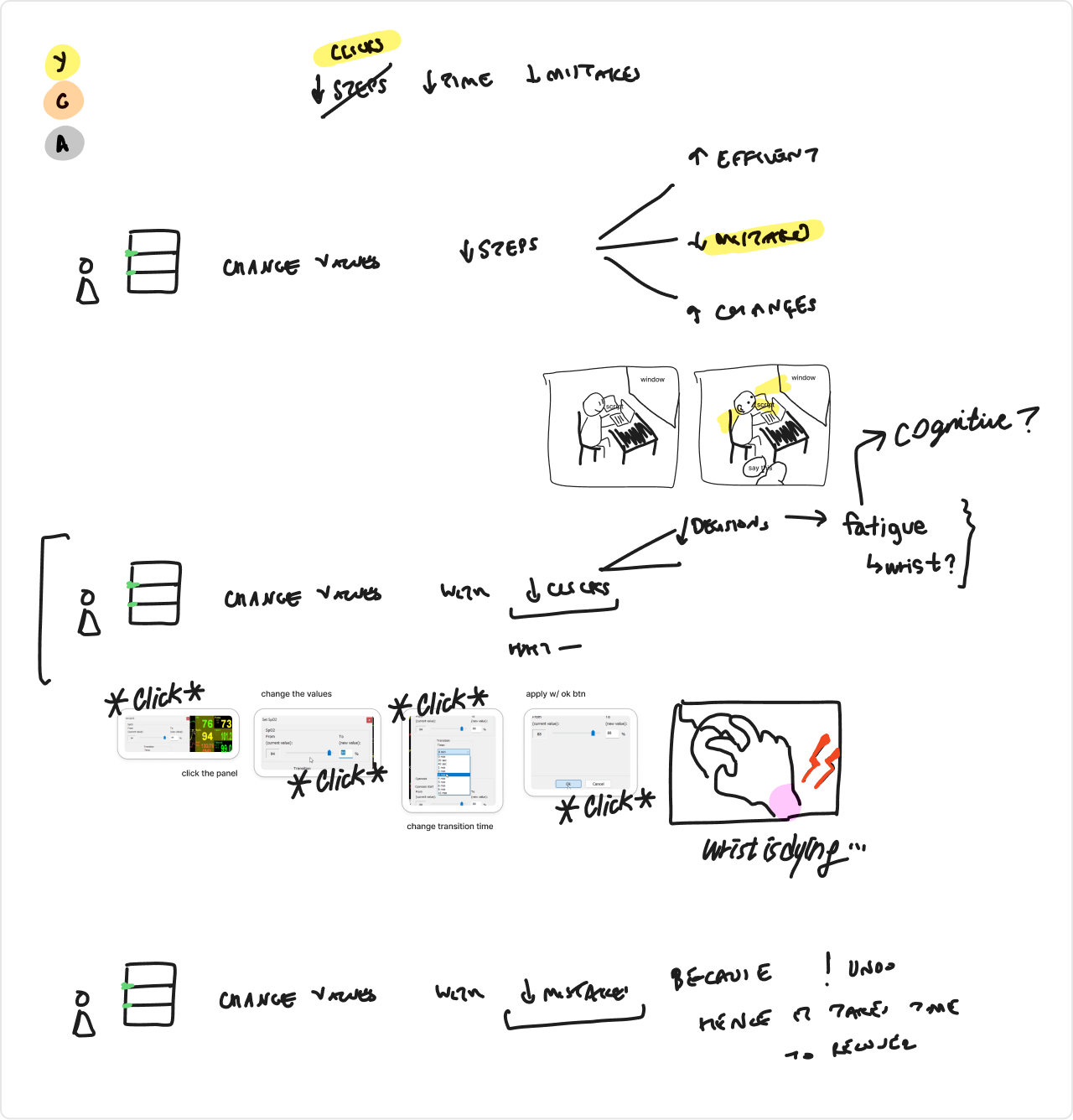
this week, i forced students to stick to words: to write focused problem-statements (using the format described for jira stories or hmw statements as starting points); define specific and narrow goals; and substantiate everything with evidence (eg. images, quotes, journey-maps, storyboards to illustrate the problem) and insights.
basically: students were pushed to burst open statements like “make the interface more efficient” by first defining what terms like “efficient” meant in their context (say, ‘to complete said task in half the time, with fewer clicks, and a lower chance for making errors’), and then identifying which heuristics were violated (and when and how often).
their broad initial goal, then, became many small goals: so that, from next week, students would prioritise and fix those many small heuristic-violations one at a time, and at each step along the way we’d all be able to use an objective vocabulary to discuss each exploration (eg. by asking “does this reduce clicks” instead of “how is this efficient”).
uxfun (26.3FA)
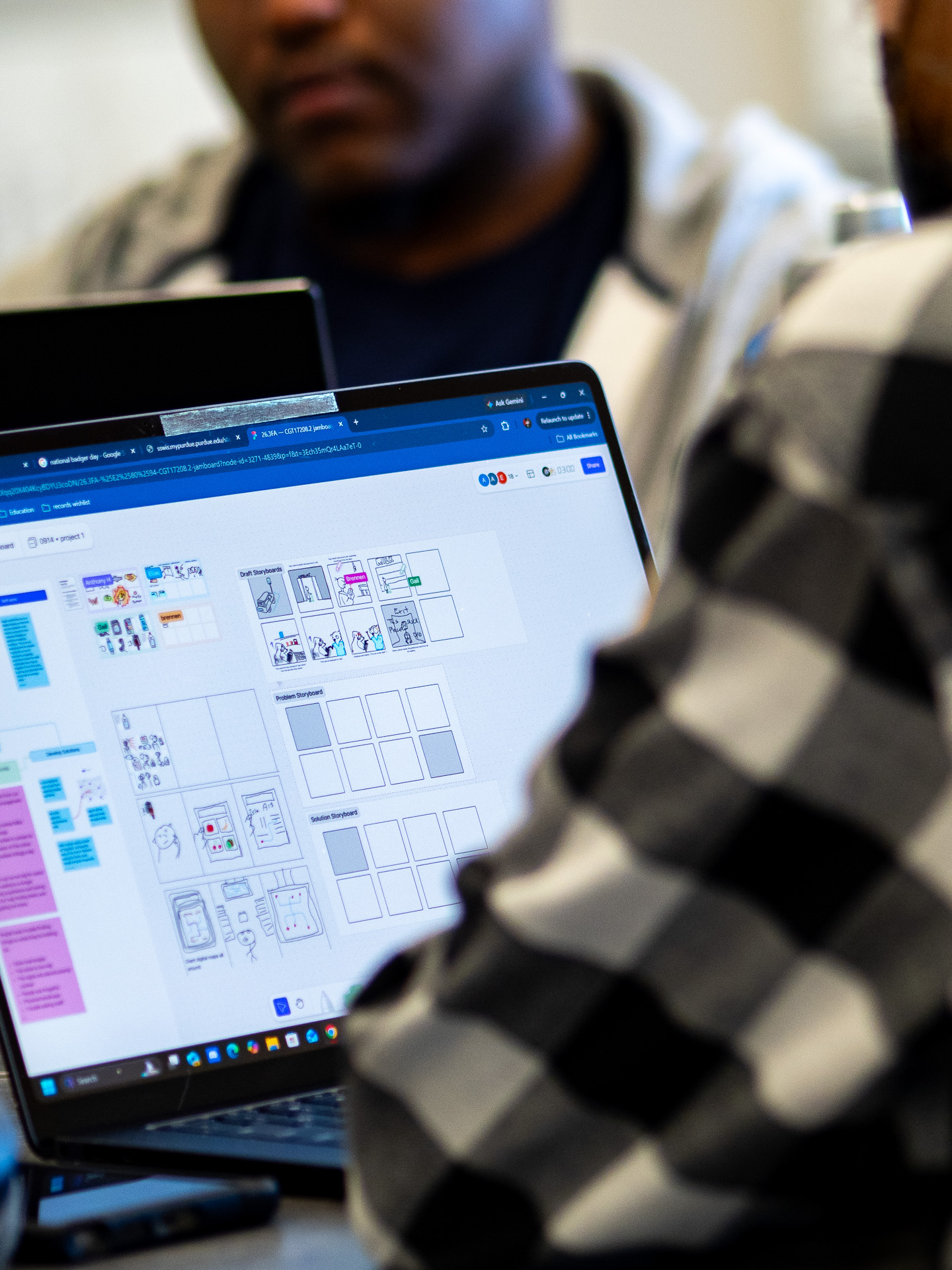
students made storyboards to communicate two things: the problems they’d identified, and solutions that they sketched last week.
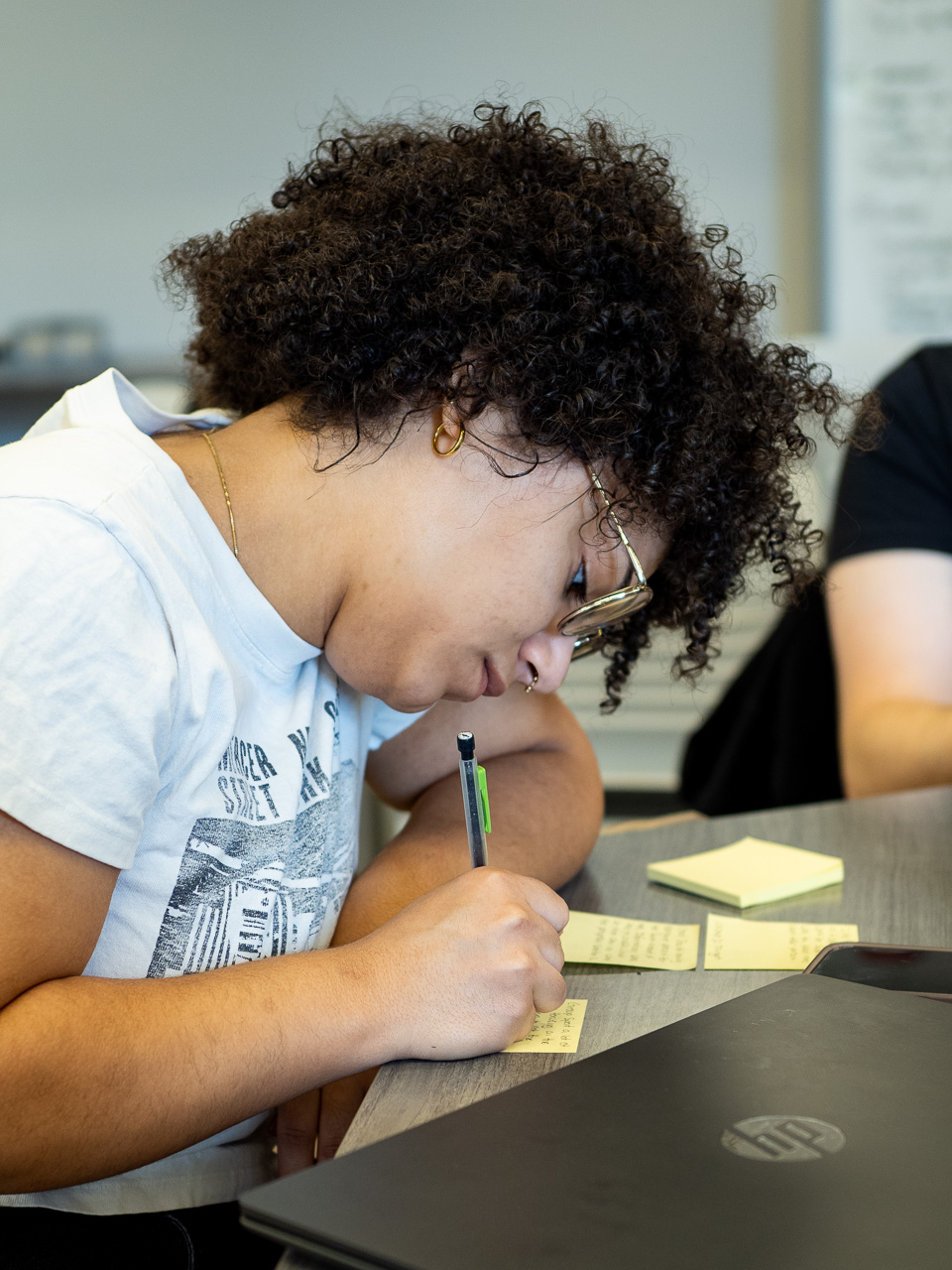
and then each group presented its work to the class to bring the project to an end.
i’ve attended presentations in other classes before and noticed how students in the audience are disengaged when others present. i don’t like this because students lose opportunities to reflect or share learnings; plus, it creates the wrong impression that instructors make the best advisors. overall, presentations tend to be drab affairs. presentations should be an opportunity for students to learn from each other instead of being trivialised as a “we did work, so give us grades” exercise. so, over the past year—first with mustafa arshad’s help, and now with yanhong lu and sienna wheeler’s inputs—i’ve structured ‘presentation’ classes in such a way that all students contribute to each other’s learning on the day. (we used reflective questions, post-its, group-discussions, and a bell. and no one looked at a screen while their peers presented. whee.)
behaviour hacking project (26–27)
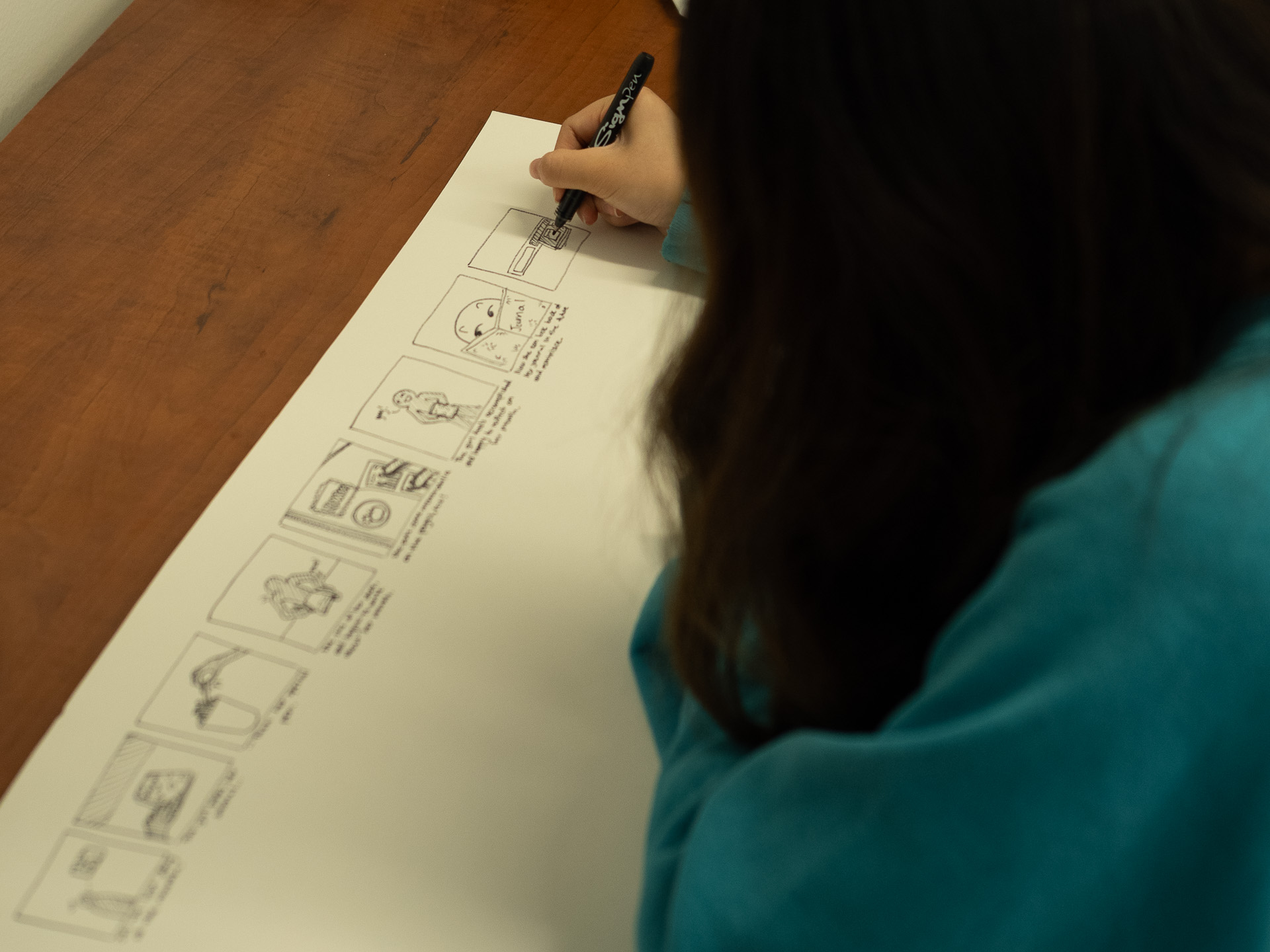
in this week’s session, we deconstructed a ritual (into its actors, goals, objects, actions, etc), and then ‘hacked’ it by changing one or two things in it, à la decomputation.
here’s one example: if we have a ritual whose goal was to help a person calm down before a class, can we use the same ritual to help them de-focus (and become playful or excited for an evening party, perhaps)? what are the fewest changes we can make to it to adapt the ritual for this new goal? (for example: could we change the sequence of events, by cutting-up the storyboard’s frames and moving them around? could we instead change one object, or maybe just action the person performs?)
office hours
met a few different students.
- advised one student to reflect and express his thoughts regularly (in the form of words, hand-drawn sketches, performed sounds, or something else), to help him develop conviction for the decisions he makes.
- advised two other students (one in purdue ux design, and the other in nmd-nid) on projects they were working on. by and large, my feedback was “focus on one aspect of the problem instead of being too broad”.
other projects
student integrity (research)
continued to meet different faculty in purdue acc and request them to fill our survey. so far, about 30 faculty out of 75 have responded to it.
drs design ethics group
in our monthly meeting, i learned that at-least two members use the unethical designs website as part of their teaching-work ; that made me glad. the website is poor in many respects, and also lacking in content ; so, i made a note to rework the website in the future.
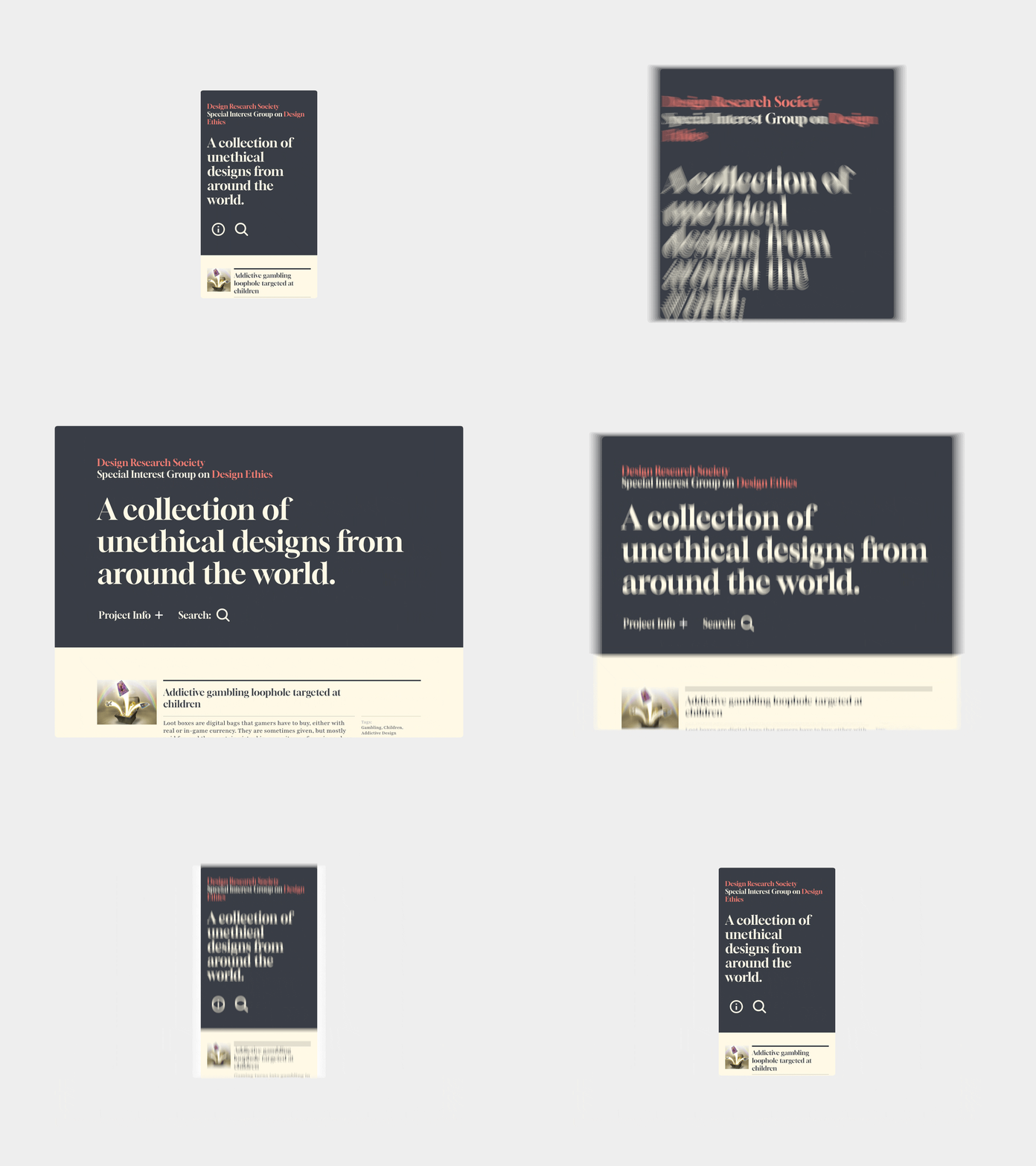
i decided to use a gen’t whenever i do get-around to updating the website. (my procrastination against using gen’ts has lasted much too long.)
strategic friction
woke up at 2 am one night with a sudden urge to build on friction and strategists. used a gen’t1 to perform some literature review on concepts like active pause. i found those concepts useful, but ultimately was confident that my thoughts were novel enough to be written about. i wrote them down and sent them to sheel damani. i probably should write a paper on it, but i’m not really a fan of academic writing2.
absorbing
impact course
we continued learning about (and discussing) designing assessments and activities for a course. (for example, we read examples from the k patricia cross academy’s ‘techniques archive’, and selected techniques which may apply to specific learning objectives in a class.)
writing
the home is what you make of it, not what it is made of.
— miss made fun of me for writing it. rightfully so, because it is cheesy a-f.
physical activity
climbed and stretched and exercised my core one morning before playing badminton. played much better. (this may be because my body was sufficiently warmed-up before playing, but i also think i am getting better at badminton.) i made a lot of unforced errors of-course, but i felt in control on some shots instead of just trying desperately to keep-up with the other players.
my knee is still sensitive, but less so. i am not satisfied with how much the little time i am devoting to my body, but i am also content with the fact that i haven’t mismanaged this problem.
other
also spoke with rohit sharma, who shared how powerful gen’ts have become for programming tasks. we touched on statements like these:
- do you want to write code or build software?
- do you want to obsess over how to make a poster, or over getting a message across (and also: questioning the message, and other such things)?
- do you want to make sounds, or a musical instrument ; or do you want to make people feel a certain way?
decided to express pity instead of anger when labelled an indentured servant.
songs for the week: ed sheeran’s ‘azizam’ (on spotify). i am well aware of ed sheeran’s greedy, cowardly hypocrisy ; the dilemma around separating an artist and their art continues to rear its head in ugly ways, by forcing me to pay attention to spineless artists who i’d prefer not to. i think i just really dearly like the word ‘azizam’. (see what i did there?)
Footnotes
-
the tool was: google gemini ‘deep research’. i am not mentioning its name in order to advertise it. i found the tool to be useful, but the interface was also sycophantic, cloying, annoying. i think this is problematic, and hence wish to call it out. ↩
-
i also believe that the age of writing papers is dead. or at-least that is how i want it to be, perhaps so that i don’t need to write academic papers. ↩